

Extending a Listed Building: What's Possible and What's Not?
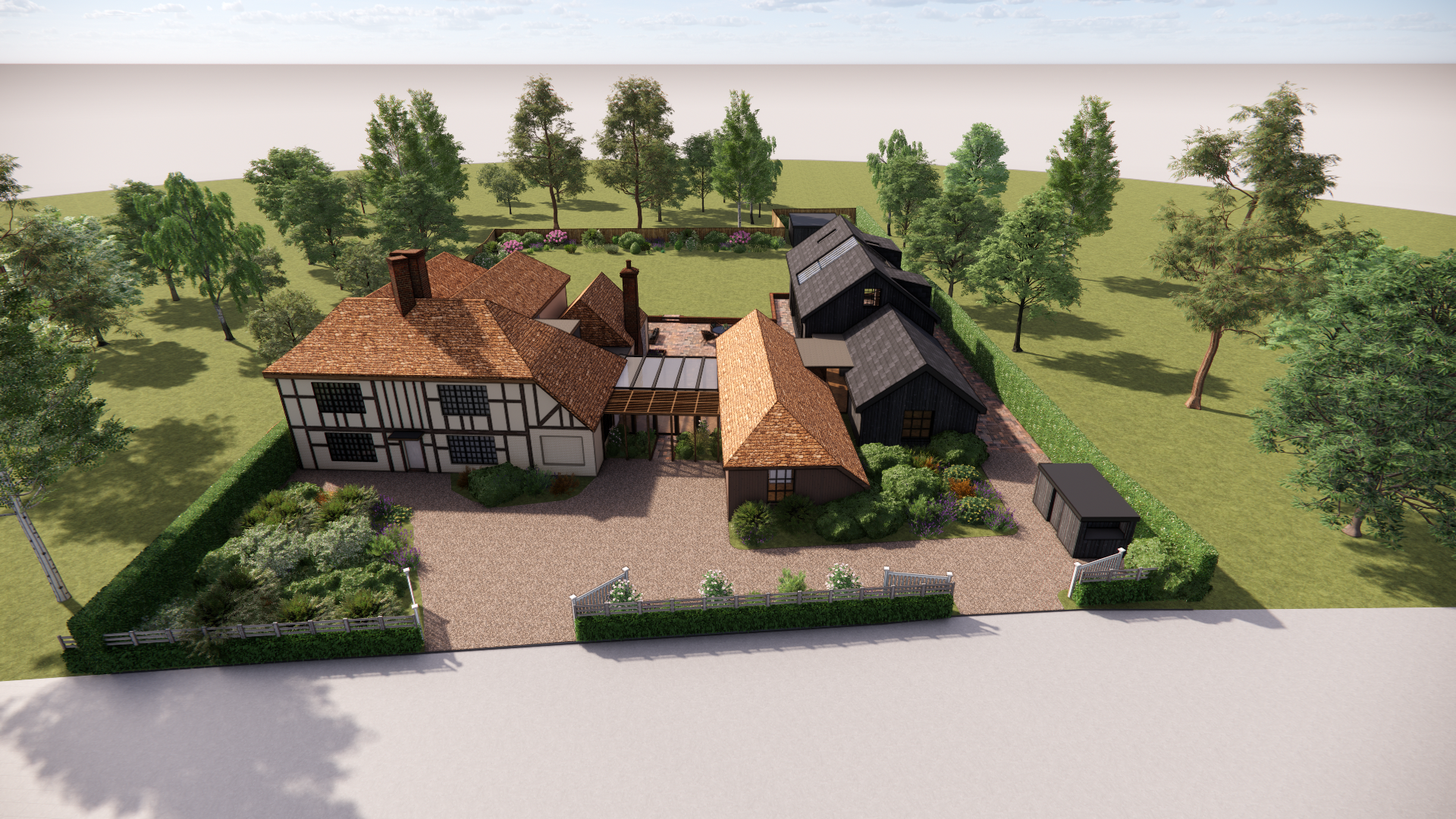
An approved Glazed Link and Dual Barns to a Grade II Listed Dwelling in South Oxfrodshire, currently under construction.
With Grade Listed Buildings, one of the questions I'm asked most often, usually within the first five minutes of a phone call, is some version of: ‘Can we even touch it?’… Owning a listed building comes with a particular kind of anxiety. People love the character of their home, but they're often convinced that any change… a new window, an extra bedroom, a kitchen extension… is somehow off-limits. It rarely is. It just has to be done properly, with the right architect and the right approach to Listed Building Consent.
A recent project in South Oxfordshire is a good example. Our clients had bought a Grade II listed farmhouse with a cramped, single-storey 1970s kitchen extension tacked onto the rear… itself not original, and not particularly sympathetic to the house. They wanted more space, more light, and a kitchen that actually worked for a family of five, but they were nervous about starting a fight with the conservation officer before they'd even had their morning coffee.
What Is Listed Building Consent?
Listed Building Consent (LBC) isn't really about whether you're allowed to extend a listed building. It's about whether the proposed work would harm the "special architectural or historic interest" of the property. In practice, that means the conservation officer is looking closely at:
Which parts of the building are original and which have been altered over the years (a 1970s extension carries far less weight than the Georgian front elevation it's attached to).
Whether new work is clearly subordinate to the historic fabric, in scale, position, and materials.
Whether the change is reversible. Extensions and alterations that could, in theory, be removed in future without damaging historic fabric are looked on far more favourably than ones that aren't.
Internal features as much as external ones… fireplaces, staircases, panelling, and joinery can all carry listing significance, even in rooms that look unremarkable at first glance.
Case Study: Extending a Listed Farmhouse in South Oxfordshire
Because the existing rear extension had no historic value, removing it was straightforward to justify. The harder conversation was about what replaced it. We designed a new single-storey kitchen and garden room in brick and oak-framed glazing, deliberately set back from the corners of the original house and finished in a contrasting but complementary palette, so that from the garden it reads clearly as a modern addition rather than a pastiche extension pretending to be old.
We also did the legwork before submitting: an early conversation with the conservation officer, a heritage statement explaining the significance of each part of the building and why our approach respected it, and photographs showing exactly what was original and what wasn't. Consent was granted without amendments, which is rarer than you'd think.
Common Mistakes Homeowners Make With Listed Building Extensions
Assuming the whole building is equally protected. It isn't… significance varies room by room, sometimes wall by wall.
Thinking "matching" is always the safest design approach. Conservation officers often prefer an honest, well-detailed contrast over a poor copy of historic detailing.
Leaving the heritage statement as an afterthought. A clear, well-argued statement is often what turns a borderline application into an approved one.
Forgetting that internal alterations need consent too, not just the visible exterior changes.
FAQs: Extending a Listed Building
Do I need planning permission as well as Listed Building Consent? Often, yes. Most extensions to listed buildings need both Listed Building Consent and full planning permission, since they're assessed against different policy tests.
Can I make internal changes without consent? No. Internal alterations to a listed building… removing a wall, replacing a staircase, even some redecoration in significant rooms… can require Listed Building Consent even if nothing changes on the outside.
How long does Listed Building Consent take? Most local authorities aim to determine applications within 8 weeks, though more sensitive heritage cases can take longer, especially where Historic England is consulted.
Key Takeaways
Listed buildings aren't meant to be frozen in time, and most conservation officers know that better than anyone. The goal isn't to avoid change, it's to make sure any change earns its place. With the right argument and the right detailing, that farmhouse kitchen is now exactly what our clients wanted: bright, modern, and built around a family's daily life, sitting comfortably alongside two hundred years of history next door.
Thinking about extending a listed building in Berkshire, Buckinghamshire, Hampshire, South Oxfordshire, Surrey, or West London? Get in touch to talk through what's possible.