

Replacement Dwellings in the Green Belt: Getting the ‘Not Materially Larger’ Test Right
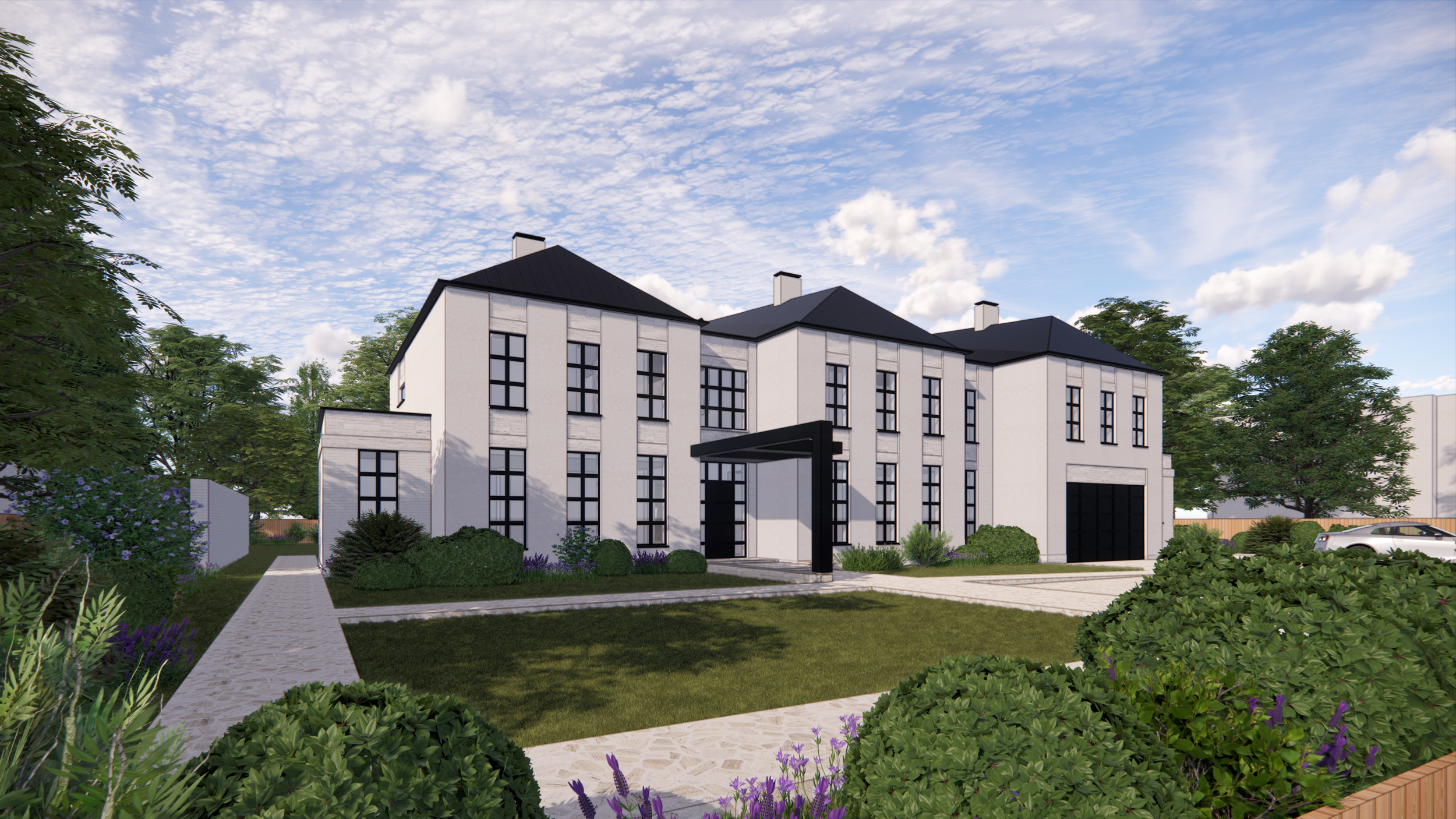
Across Surrey and West Berkshire in particular, a huge proportion of the enquiries we get involve a tired or dated house sitting on a generous Green Belt plot, with clients wanting to knock it down and start again. The instinct is understandable. What's often misunderstood is just how tightly a replacement dwelling in the Green Belt is controlled, and how much hinges on a single planning test.
What Counts as ‘Not Materially Larger’ in the Green Belt?
National planning policy treats the Green Belt as land to be kept permanently open. New homes are, by default, ‘inappropriate development.’ But there's a specific exception for replacement dwellings: a new house can be acceptable in the Green Belt provided it is not materially larger than the one it replaces.
That phrase, "not materially larger," does a lot of work, and it's where most replacement dwelling projects either succeed or stall. There's no fixed national percentage. Local planning authorities each set their own benchmark, often somewhere in the 30–50% increase in volume range, measured against the original dwelling, not whatever extensions and additions have crept in since.
Case Study: A Green Belt Replacement Dwelling Near Elmbridge, Surrey
Our clients owned a mid-century house on a generous Green Belt plot in Elmbridge. The existing house was poorly insulated, awkwardly laid out, and well below the quality the site deserved. They wanted a contemporary two-storey replacement dwelling with considerably more accommodation.
The first job wasn't design, it was forensic. We needed to establish:
The lawful original volume of the dwelling, using historic plans, Ordnance Survey data, and in this case a previous extension that had already used up some of the local authority's allowance.
The local authority's specific Green Belt policy wording and any adopted percentage benchmark for volume increase.
Whether any outbuildings or garages on site could be considered part of the ‘original’ footprint, or whether they would count against any uplift separately.
Once we had a clear, defensible baseline, we could design within it with confidence rather than guessing and hoping. The final scheme increased the volume by a figure comfortably inside the local authority's accepted range, replacing a low, dark bungalow with a light-filled, energy-efficient two-storey home, and consent was granted at committee stage without significant objection.
Common Mistakes in Green Belt Replacement Dwelling Applications
Treating ‘not materially larger’ as a percentage you choose, rather than one set by the local plan or policy guidance, which varies authority to authority.
Forgetting that previous extensions are not background noise. They count towards the volume calculation and can significantly reduce the room left for a new design.
Designing first and checking the numbers second. The volume test should shape the brief from day one, not get retrofitted onto a finished design.
Assuming a single-storey to two-storey change is automatically a problem. Height and form matter, but it's the overall volume the policy test is actually concerned with.
FAQs: Replacement Dwellings in the Green Belt
Can I build a bigger house in the Green Belt? Only within the’not materially larger’ exception. There's no automatic right to a significant size increase; it depends on your local authority's adopted volume threshold and the lawful baseline of the existing house.
What is the original dwelling for Green Belt calculations? It's usually the house as it stood on 1 July 1948, or as first built if later, before any subsequent extensions… not the house as it stands today if it has already been extended.
Do I need a planning application for a replacement dwelling? Yes. Replacement dwellings in the Green Belt require a full planning application, supported by evidence of the existing dwelling's lawful volume.
Key Takeaways
Green Belt replacement dwelling projects reward patience and precision more than ambition. Get the baseline volume right, understand the local authority's specific position, and there's usually more scope for a genuinely better home than people expect.
Considering a replacement dwelling on a Green Belt plot in Berkshire, Buckinghamshire, Hampshire, South Oxfordshire, Surrey, or West London? Get in touch to discuss your site.